

When planning a bathroom renovation, it’s easy to get caught up in choosing tiles, colours and fixtures. But a truly beautiful bathroom starts long before anything goes on the wall. The success of the renovation ultimately depends on the layout, which determines how functional and open the space will be. A well-planned bathroom layout not only enhances the bathroom space’s appearance but also improves comfort, functionality, and long-term value. On the other hand, a poorly designed layout can lead to awkward movement, limited storage, and daily frustration, no matter how stylish the final result appears.
In this blog, we will explore the key factors that make or break a bathroom layout. From understanding your space and practical needs to avoiding common planning mistakes, this guide will help you make informed decisions and choose a layout that balances functionality, comfort, and style. Whether you’re in the early planning stages or refining your renovation plans, these insights will help you create a bathroom that works beautifully for years to come.

Assessing Your Space
Before planning a bathroom renovation, thoroughly assess your space. Measure the room accurately, noting the positions of doors, windows, and existing plumbing. Understanding these dimensions and constraints is essential, as it determines which layouts and fixtures will fit comfortably. A clear picture of your space sets the foundation for a renovation that is both functional and visually balanced.
Determining Your Needs
Once you have a clear understanding of your space, the next step is to determine your needs. Consider how many people will use the bathroom and their daily routines, as these factors influence the number of sinks, the size of the shower or bathtub, and storage requirements. Decide whether a bathtub, a shower, or both will best suit your lifestyle.

Additionally, consider accessibility, especially if the bathroom will be used by children, elderly family members, or anyone with mobility challenges. Clearly defining your needs ensures the layout you choose is practical, comfortable, and ideal for everyone who will use the space.
Storage Solutions
Storage is a critical element of any bathroom layout, as it keeps the space organised and clutter-free. Built-in cabinets or recessed niches can provide seamless storage without taking up extra floor space. Vanity drawers and shelving offer convenient spots for daily essentials, while over-toilet units make use of otherwise wasted vertical space.

For a sleek, minimalist look, consider hidden storage options such as benches with compartments or mirrored cabinets, which combine practicality with style. Effective storage solutions ensure your bathroom remains functional and visually clean.
Traffic Flow
Traffic flow plays a crucial role in determining the ideal bathroom layout, as it influences where fixtures and features can be positioned. When planning the layout, ensure there is at least 30 inches of clearance in front of sinks, toilets, and shower doors to allow for comfortable movement. The toilet should be placed in a discreet location, away from the entrance, which may affect the arrangement of other fixtures.

Similarly, door swings need to be considered to avoid interference with cabinets, vanities, or shower enclosures. By prioritising traffic flow during layout planning, you can make informed choices about fixture placement that maximise both functionality and comfort in the space.
Plumbing Lines And Outlet
Plumbing plays a major role in shaping your bathroom layout, as the position of existing water supply lines and drains directly influences where sinks, toilets, and showers can be placed. While relocating plumbing outlets is possible, doing so can be expensive and may require extensive work, making it a critical factor in your layout planning. Working with the current plumbing wherever possible allows for a more cost-effective renovation and minimises structural changes.

Popular Bathroom Layout Options
The right bathroom layout can make a big difference in both style and functionality. From compact designs that maximise space to layouts that create separate zones for comfort and convenience, these popular options help homeowners create bathrooms that are efficient, organised, and visually appealing.
One Wall Layout
The Single Wall Layout is a streamlined bathroom design in which all fixtures, including the sink, toilet, and shower or tub, are placed along one wall, creating a clean, organised look while maximising open floor space. This layout is ideal for small or narrow bathrooms such as powder rooms, apartments, or guest bathrooms where space efficiency is important.

Its simplicity allows for easy plumbing installation and makes the room feel more spacious while still accommodating all essential fixtures. Homeowners seeking a functional and cost-effective bathroom often choose this layout for its practicality and modern, minimalist appeal.
L-shaped layout
The L-shaped layout is a versatile bathroom design in which fixtures such as the sink, toilet, and shower or tub are arranged along two walls that form a right angle. This layout is ideal for corner spaces or medium- to large-sized bathrooms, as it naturally separates wet and dry areas, improving functionality and flow. It allows for more counter and storage space while maintaining an open and organised feel. The L-Shaped Layout is ideal for homeowners seeking a natural separation between wet and dry areas while maximising corner spaces.

U-Shaped Layout
The U-shaped layout is ideal for larger bathrooms or master en-suites, with fixtures arranged along three walls to create a defined, enclosed space. This design allows clear separation between areas, such as the vanity, toilet, and shower or bathtub, enhancing privacy and functionality. It also provides ample room for storage, countertops, and even seating if desired.

When planning a U-shaped layout, it’s important to maintain sufficient clearance around each fixture to ensure comfortable movement and avoid a cramped feel. This layout combines practicality with a sense of luxury, making it a popular choice for spacious bathrooms.
Galley Layout
The galley layout is a popular choice for narrow bathrooms, featuring fixtures arranged along two parallel walls. This layout maximises the use of limited space while maintaining a clear walkway in the centre, allowing for smooth traffic flow. Sinks, toilets, and showers are positioned efficiently, often with storage built along one or both walls.
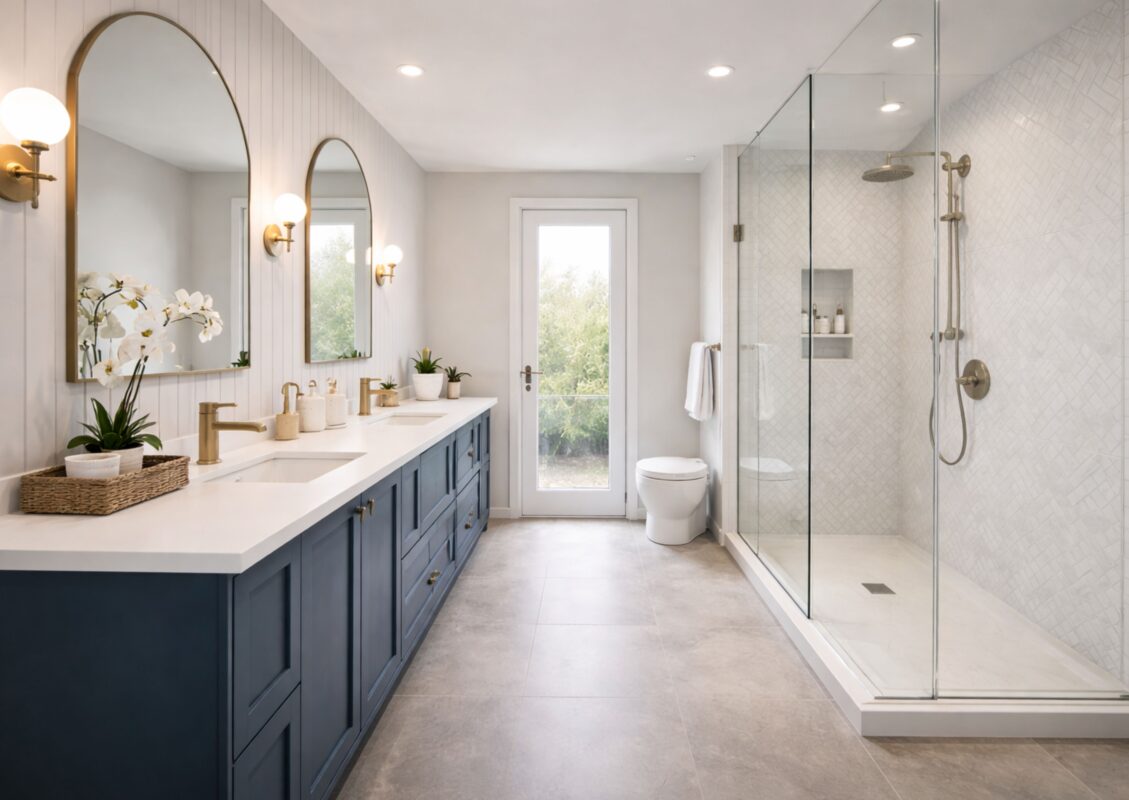
While the galley layout works best in long, narrow bathrooms, careful planning is needed to ensure adequate clearance around each fixture for comfort and accessibility. Its linear design makes it a practical option for maximising functionality without compromising style.
Conclusion
Choosing the ideal bathroom layout is about finding the right balance between space, functionality, and practicality. From assessing your room dimensions and understanding your daily needs to considering traffic flow, storage, and plumbing constraints, each decision plays a role in how well the space will work. By taking the time to plan carefully and prioritise what matters most, you can create a bathroom that is both practical and visually appealing.